✦ Dispatches from the Moniverse
The calendar
Or: twelve months of discoveries
The Christmas season arrived on families like a reminder, a set of rails to keep you on track and even out the excesses behind you. Every good family got ready to appear in church tidy, clean, in new clothes. My hair had to be thinned out to fall into line with the season that was coming.
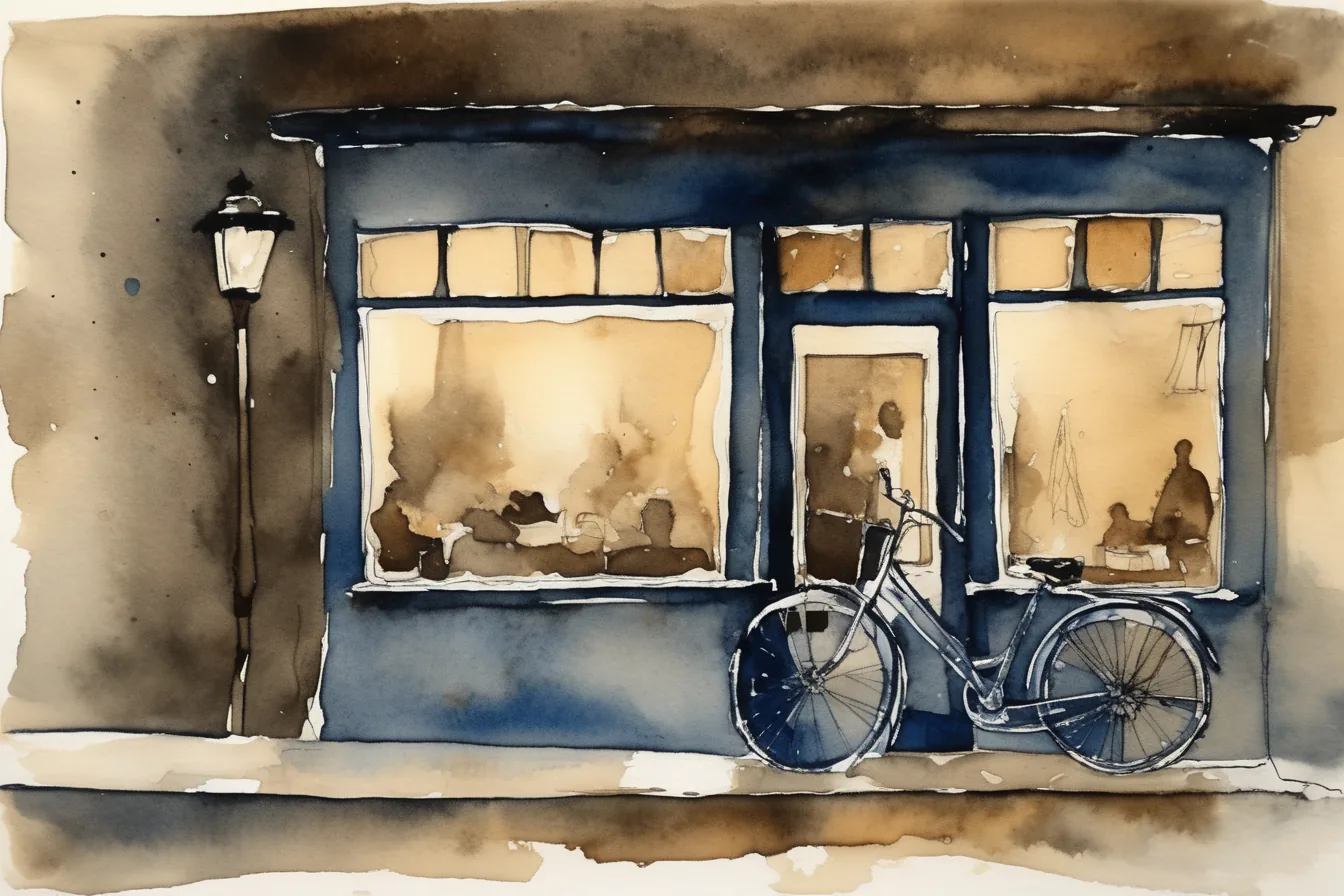
The barber’s shop was near the railway station in Navacchio. A big plate-glass window at the entrance lit up the small room, and you could see in from outside and out from inside, no secrets. A place for men only, but on show to the whole village like a noticeboard. Two big, comfortable chairs, the kind with armrests and a high back. When you were small you sank into them, and they put a booster seat under you to bring you up to the right height. This time I didn’t need it any more.
The barber was older than my father. He wore a coat somewhere between a doctor’s and a butcher’s. He knew everyone, customers by name and passers-by by face, and whatever he didn’t see was brought to him by a network of informers disguised as customers. He knew how the world went because the world went past his window and every so often sat down in his chair. For him, Christmas was probably just a time of too much work and too much news.
The air smelled of shampoo and strong scent. Boys weren’t entitled to brilliantine, that was for grown-ups. Our hair was kept clean and put in order by brush and fire: the brush that scraped your scalp (a sensation I know well today, if a little less) and the blast of the hairdryer at full throttle, which had no settings. In the mirror you watched the transformation with no say in what was kept and what was thrown away. He decided, and at the end, out of good manners, you said it was perfect.
Then came the second atomiser, a puff of scent on the neck and shoulders, like a calling card: you went out different from how you had come in, and everyone could smell it.
Just before I turned to leave he said: “Wait, here, I want to give you one too. Happy Christmas.” And he had a good laugh. He opened a little drawer and took out a small booklet folded like a holy card, but with more pages. I stood there as if in a daze, I didn’t quite understand, or perhaps I pretended not to. I took the booklet, blushing perhaps, and made off like a thief.
At home I opened it alone, taking my time. It was thin paper, the pages in pairs: on one side a young lady, on the other the days of the month in a row. Body and calendar, bound together with a red cord. It smelled of something halfway between lavender and a woman’s perfume.
The mystery, close up, was less mysterious than they had promised. Just beautiful. And yet there it was, hidden, twelve times, one for each month.
I leafed through it calmly, the way you examine something you have never seen. I kept it hidden because I knew I wasn’t supposed to have it, but to me hiding it was just logistics. In the end I lost it and forgot it, as happens to things you keep too well hidden.
I came out of the barber’s with the booklet in my pocket and the scent on my neck. My bike was leaning against the wall where I had left it and the village was the same as before, but in my pocket I had something burning.
A few days later it was Christmas.
In those years television had brought cowboys into every living room. Pistols, duels, caps, and the script was always the same: good and bad could be told apart by which side they fired from. So a tidy family in its Sunday best could quite happily give its son a cap rifle.
The rifle came from Uncle Antonio. Antonio had two daughters and would have a third, but he didn’t know it yet. He gave rifles to other people’s boys the way you pay a bill at the counter. He didn’t play with us and he didn’t stay: he left the present and went.
It was a perfect replica but in miniature, so light that even a small, weak child could have held it. The stock was plastic made to look like wood, like the ones you saw on TV in the battles with the Indians. Under the tree, with the wrapping paper still on, it looked like a serious thing. In your hand it weighed nothing.
In the garden I fired it on my own, pointing at the sky, with no target. What interested me was the moment after: the bang, the smoke, the sparks, so much energy packed into such a small space. The smell of burnt powder hung in the air, metallic and dry, the exact opposite of lavender. There weren’t many caps and they had to be used sparingly. When they ran out, the rifle went back to being plastic.
That Christmas I had the rifle in my hand and the calendar in my head. The village was the same and my parents were where they always were. The scent of lavender had already worn off.
That was how it went.
Translated from the Italian original of 4 June 2026.